Explore Science: Advanced Materials, Bioelectronics and Biomedical Technologies
Advanced materials, bioelectronics, and biomedical technologies bring together materials science, electronics, biology, and engineering. These interdisciplinary fields help researchers develop precision components, measure biological signals, detect chemical and biological targets, and investigate complex living systems.
At MicroVitra, we explore the scientific principles behind these technologies, from the properties of glass-coated wires to the operation of microelectrodes, biosensors, and microfluidic devices. Our goal is to make complex scientific concepts easier to understand through accessible explanations, practical examples, and links to scientific literature.
Explore the topics below to discover how engineered materials and miniaturized technologies contribute to modern research.
1. Advanced Materials : Glass-Coated Wires
Glass-coated wires are thin metal wires covered with a protective glass layer that provides electrical insulation and helps protect the metal core from its environment. In biology and biomedical research, different types of glass-coated wires are being explored for applications such as magnetic biosensors, temperature and stress monitoring, neural signal recording, and experimental cell manipulation. Their potential uses depend on the metal composition, magnetic properties, wire dimensions, and glass insulation. Although promising, many of these applications remain at the research stage rather than being established clinical technologies
Types of glass-coated wires and their potential uses in biology
Type of glass-coated wire | Main properties | Potential biological or biomedical uses |
|---|---|---|
Glass-coated magnetic microwires | Magnetic properties can change in response to temperature, stress, or magnetic fields. | Miniaturized magnetic sensors for biomedical temperature and mechanical-stress monitoring. |
Amorphous ferromagnetic microwires | Lack long-range crystalline order and can exhibit useful magnetic switching and magnetoimpedance effects. | Magnetic biosensing research and sensing systems for biological measurements. |
Glass-coated microwires with tailored magnetic properties | Their magnetic behavior can be adjusted through alloy composition, dimensions, and heat treatment. | Research into miniature sensors and detection systems that respond to changes in their environment. |
Glass-insulated metal microelectrodes | A conductive metal core is insulated by glass, often with a small exposed tip for electrical contact. | Recording extracellular electrical activity from neurons and investigating neural signals in experimental research. |
Glass-coated magnetic microwires for cell manipulation research | Magnetic responses can enable remote manipulation under suitable experimental conditions. | Investigational approaches to manipulating magnetic objects or labeled cells in laboratory systems. |
the figure below shows Image of the experimental steps facility for fabrication of thin Heusler based-glass-coated microwires: (a) arc melting furnace, (b,c) Taylor–Ulitovski method for production of glass-coated microwires, (d,e) Heusler-based glass-coated microwires sketch, (f) optical microscope, and (g) SEM images of Heusler-type Co2FeSi glass-coated microwires.

2. Bioelectronics: Connecting Electronics and Biology
Wearable biosensors are compact devices that detect and monitor biological or physiological signals while being worn on the body. Using flexible materials, electronic sensors, and sometimes wireless communication, they can measure parameters such as heart activity, skin temperature, movement, and selected substances in sweat.
The future of wearable biosensors lies in developing smaller, more comfortable, and more accurate devices that provide continuous physiological measurements. Advances in flexible electronics, microfluidics, and artificial intelligence may help researchers analyze biological changes in real time and support personalized health monitoring. However, reliable measurements, data privacy, and clinical validation remain essential for their wider adoption
Read More
1. Wearable Sensors for Health Monitoring: Current Applications, Trends, and Future Directions
3. Biomedical Technologies: Innovations at the Intersection of Biology and Engineering
Biomedical technologies combine biology, engineering, materials science, and electronics to develop tools and systems for understanding biological processes, studying diseases, and advancing healthcare research. These technologies range from miniature diagnostic devices and electronic interfaces to engineered tissues and intelligent materials. By integrating scientific knowledge with innovative design, biomedical technologies help researchers investigate complex biological systems, improve laboratory analysis, and explore new approaches to diagnosis, monitoring, and treatment. Their development depends on advances in miniaturization, biocompatible materials, sensing technologies, and data analysis.
Organ-on-a-Chip Technology
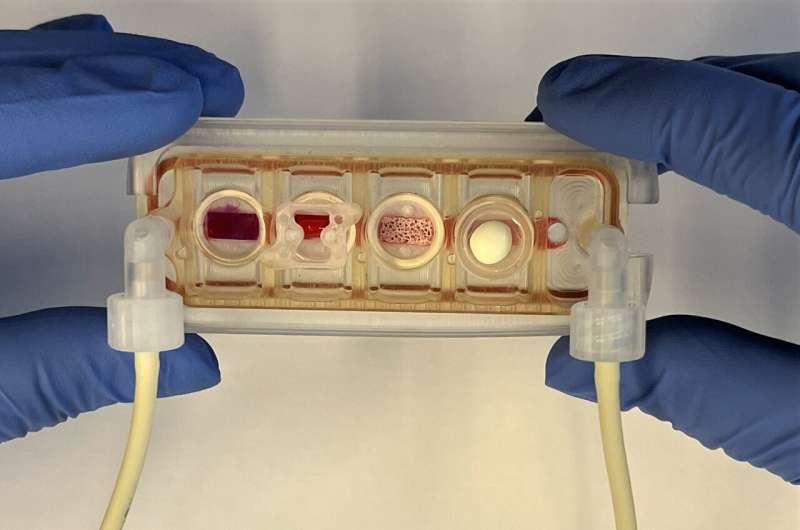
Organ-on-a-chip technology uses miniature devices containing living cells to reproduce selected functions of human organs under controlled laboratory conditions. These systems allow researchers to investigate tissue behaviour, study disease mechanisms, and evaluate how cells respond to potential treatments. They offer a promising approach to studying human biology in more realistic experimental environments.
3D Bioprinting and Tissue Engineering:

3D bioprinting and tissue engineering combine living cells, biomaterials, and specialized fabrication techniques to create structures that reproduce selected features of biological tissues. These technologies support research into tissue development, disease modelling, regenerative medicine, and the interaction between cells and engineered materials. Their applications depend on the ability to maintain cell viability and reproduce relevant tissue properties.